
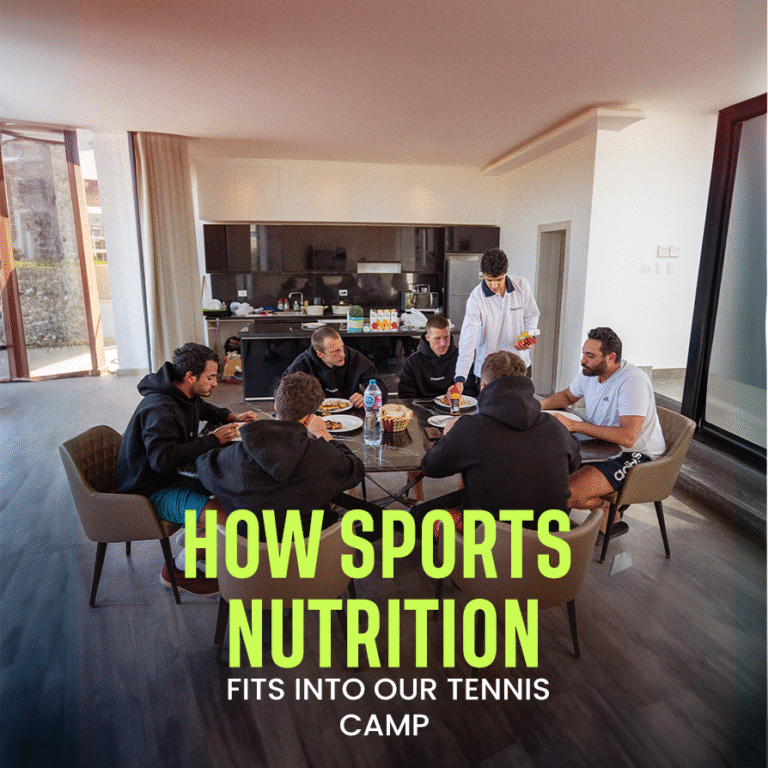
Sports nutrition is not an optional add-on at a professional tennis camp; it is a daily habit that shapes performance, focus, and recovery. At Court & Co, nutrition is treated as part of the training philosophy, not a separate topic discussed once and forgotten. Every session on court, every fitness workout, and every recovery window is supported by smart nutritional awareness that matches the intensity of tennis. This article explores how nutrition fits naturally into the Court & Co tennis camp experience, from early-morning routines to post-training recovery. Whether you are a junior player, an adult athlete, or a parent looking to understand the process, you will see how structured eating habits help players train better, stay energized, and develop long-term performance discipline.
Starting the Day Right: The Best Breakfast Before Tennis
A strong tennis day always starts with a smart breakfast. At Court & Co camps, players are guided to understand why breakfast matters, not just what to eat. Tennis demands explosive movement, endurance, and sharp decision-making, all of which depend on stable energy levels early in the day.
A balanced pre-training breakfast focuses on complex carbohydrates for energy, moderate protein for muscle support, and light fats that do not slow digestion. Foods like oats, whole-grain bread, eggs, yogurt, fruit, and natural hydration options are ideal. The goal is to feel fueled, not heavy.
Timing is also critical. Camp routines encourage players to eat 60–90 minutes before stepping on court, allowing proper digestion while ensuring glycogen stores are ready. By building this habit daily, Court & Co helps players associate preparation with performance, reinforcing professionalism from the first hour of the day.
You also can read: Court & Co: Your Top Choice for Tennis Training in Egypt
On-Court Energy Management: What Do Tennis Players Eat and Drink During a Match?
Tennis is unique because matches can be long, unpredictable, and mentally demanding. During Court & Co training sessions and match simulations, players learn how to manage energy while playing, not just before and after.
Hydration is the first priority. Water intake is structured around changeovers, with added electrolytes during intense heat or extended sessions. Players are taught to recognize early signs of dehydration and fatigue, which directly affect reaction time and shot quality.
For longer sessions, light carbohydrates such as bananas, dates, or energy gels may be introduced. These choices are easy to digest and provide quick energy without causing stomach discomfort. The emphasis is always on simplicity and consistency, aligning with real match conditions. Through repetition, players develop confidence in their fueling strategy, making nutrition an automatic part of their competitive routine.

Nutrition for Tennis: Practical Recommendations for Campers
At Court & Co, nutrition education is practical, not theoretical. Campers receive simple guidelines they can apply during camp and continue using afterward. The aim is sustainability, not strict dieting.
Key principles include eating every 3–4 hours, balancing meals with carbohydrates, proteins, and vegetables, and avoiding extreme restrictions. Players are encouraged to listen to their bodies while maintaining structure. Snacks between sessions are planned to support energy without spikes and crashes.
Another important aspect is personalization. Body size, training load, and age all influence nutritional needs. Camp environments at Court & Co allow coaches and trainers to guide players toward better choices without pressure, creating awareness rather than dependency. This approach builds independence and long-term discipline, which is essential for tennis development.
Nutrition Plan for Junior Tennis Players
Junior players require special attention when it comes to nutrition, as their bodies are developing while being exposed to physical and mental training demands. At Court & Co, junior tennis camps integrate age-appropriate nutritional guidance that supports healthy growth, learning capacity, and on-court performance at the same time. The focus is not only on fueling training sessions, but also on building long-term habits that young players can carry into their future athletic careers.
Young athletes need sufficient calories to meet the dual demands of training and natural development. Meals are structured around whole, nutrient-dense foods that provide steady energy throughout the day. Adequate protein intake supports muscle growth and recovery, while carbohydrates play a key role in sustaining concentration, coordination, and decision-making during drills and match play. Healthy fats are also included in balanced amounts to support overall development and hormonal balance.
Hydration is treated as a daily priority, not just something addressed during matches. Junior players are encouraged to drink fluids regularly before, during, and after training, especially in hot conditions common to outdoor tennis environments. Learning proper hydration habits early helps prevent fatigue, cramps, and loss of focus, which are common challenges for young athletes.
Importantly, nutrition education at Court & Co is delivered in a positive and non-restrictive way. Food is presented as fuel for performance and growth, not as a reward or punishment. This approach helps prevent unhealthy relationships with eating and reduces pressure around food choices. Juniors learn awareness rather than restriction, understanding how their bodies respond to different foods.
Parents also play a key role in this process. By understanding the nutritional principles applied at camp, families can create consistency between camp routines and home life. This alignment ensures that young players receive the same support year-round, reinforcing healthy habits that contribute to both athletic development and overall well-being..
Inclusive Performance: Nutrition for Tennis Players
Court & Co believes performance nutrition should be inclusive and adaptable. Players come from different backgrounds, cultures, and dietary preferences, and nutrition plans must reflect that diversity.
Whether a player prefers certain cuisines, follows specific dietary choices, or has food sensitivities, the core principles remain the same: balance, timing, and hydration. Camp nutrition guidance focuses on adaptable frameworks rather than rigid menus.
This inclusive approach ensures that every player can apply sports nutrition principles in real life, not just during camp. By respecting individuality while maintaining performance standards, Court & Co creates an environment where nutrition supports confidence, comfort, and consistency on and off the court.
You also can read: Train on Professional Tennis Courts at Court & Co
Integrating the Physical: A Combined Tennis Diet and Workout Plan
Sports Nutrition in Daily Training
Training does not exist in isolation, and neither does nutrition. At Court & Co, physical workouts, on-court drills, and nutritional timing are designed to complement each other. Strength sessions require protein support, while high-intensity tennis drills rely heavily on carbohydrate availability.
Players learn when to eat before fitness training, how to refuel between sessions, and how to adjust intake on lighter days. This integration helps prevent overtraining, reduce injury risk, and improve recovery speed.
By connecting food choices directly to performance outcomes, players begin to understand cause and effect. This awareness transforms nutrition from a checklist into a performance tool, aligned with the overall Court & Co training philosophy.
Recovery and Repair: Post-Training Nutrition at the Camp
Recovery is where progress is locked in. At Court & Co, post-training nutrition is treated as a non-negotiable part of the day. Within 30–60 minutes after training, players are encouraged to refuel with carbohydrates and protein to restore energy and repair muscles.
Simple meals and snacks such as rice with lean protein, yogurt with fruit, or smoothies are commonly recommended. Hydration continues beyond the court, supporting muscle function and overall recovery.
This recovery-focused mindset teaches players that improvement does not only happen during training, but also in how they support their bodies afterward. Over time, consistent recovery nutrition leads to better endurance, reduced soreness, and improved readiness for the next session.
FAQ
Q1: Why is sports nutrition important in a tennis camp?
A: Because tennis requires sustained energy, focus, and recovery. Proper nutrition supports all three consistently.
Q2: Do players need supplements at camp?
A: Most needs can be met through balanced meals. Supplements are only considered when appropriate and supervised.
Q3: How does Court & Co teach nutrition to players?
A: Through daily routines, simple guidance, and real-life application rather than strict rules.
Q4: Is nutrition different for juniors and adults?
A: Yes. Juniors need support for growth, while adults focus more on recovery and performance balance.
Conclusion
Nutrition is not a separate lesson at Court & Co; it is part of the culture. From the first breakfast to post-training recovery, players experience how smart choices support strong performance and long-term development. By integrating training, mindset, and nutrition into one system, the camp environment naturally builds better athletes. For players looking to grow beyond drills and truly understand what supports their game, this holistic approach creates habits that last far beyond the court.